
美国队长
China’s Pinglu Canal linking Guangxi with ASEAN completes its first full-route patrol, paving way to September opening_我的网站

一 |
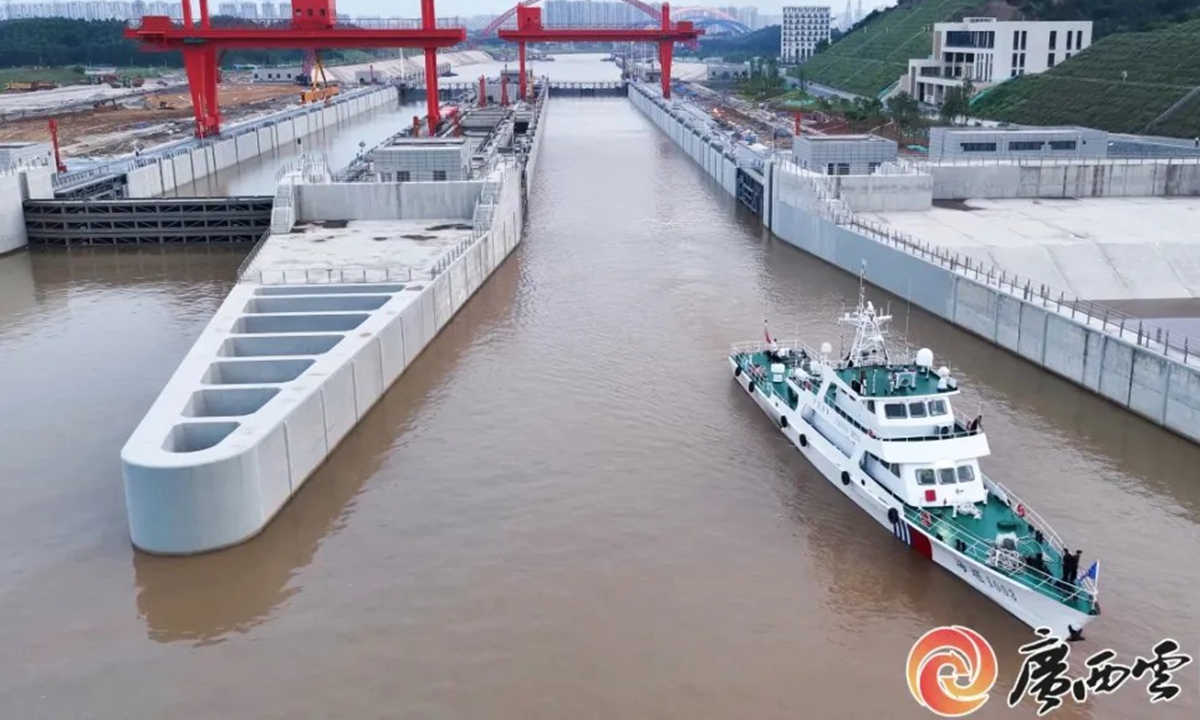
The inspection was carried out from Friday to Saturday by the Guangxi Maritime Safety Administration using the patrol vessel Haixun 1003.
Starting from the canal's seaward entrance, the vessel traveled northward along the entire waterway, passing through the Qingnian, Qishi and Madao ship locks, which remain under construction, while inspecting construction vessels operating along the route. It arrived at the Pingtang River estuary on the afternoon of Saturday.
It was the first time a vessel had completed the entire 134.2-kilometer journey following completion of the canal's main works, representing a breakthrough in full-route navigation tests using an actual vessel, according to Guangxi Daily.
The Haixun 1003 is the first offshore patrol vessel deployed by China's Ministry of Transport at Qinzhou Port. The vessel is 46.1 meters long and 6.8 meters wide, with a maximum speed of 25.3 knots and a cruising range of 500 nautical miles. It can withstand winds of up to Force 9 on the Beaufort scale, roughly 76-87 km/h usually with waves 6-9 meters.
The vessel is also equipped with an advanced marine electro-optical tracking and evidence-collection system capable of operating in color, monochrome, infrared and laser modes under different weather and lighting conditions. The system supports integrated data collection and transmission, Guangxi Daily reported.
During the patrol, maritime authorities conducted on-site inspections of key navigation conditions, including channel dimensions, curved sections of the waterway, navigational clearance beneath bridges, ship-lock approach channels and the mouths of tributaries.
The patrol was also designed to test the practicality of provisions contained in the Regulations on Navigation Safety Management of the Pinglu Canal, which are expected to take effect when the canal opens in September.
The results will provide a basis for refining vessel navigation rules and improving measures intended to safeguard traffic along the canal, according to the report.
Lü Jin, deputy director of the Qinzhou Maritime Safety Administration, said the inspection aims to assess the canal's navigational environment, verify whether navigational aids had been positioned appropriately, identify safety risks along the route and locate waters that could be used during emergencies.
The findings will also support the formulation of on-site supervision plans and help ensure that the canal opens safely and in an orderly manner on schedule, Lü said, according to Guangxi Daily.
The Pinglu Canal is a key project of the New International Land-Sea Trade Corridor. With total investment exceeding 70 billion yuan ($10.37 billion), the canal begins at the Pingtang River estuary in Hengzhou, administered by Nanning, follows the Qinjiang River into the Beibu Gulf, according to Xinhua News Agency.
It is China's first major river-to-sea canal project planned and coordinated at the national level since 1949 and is designed to accommodate vessels of up to 5,000 tons.
Once operational, the canal will give inland regions in Southwest China a more direct river route to the sea. Cargo that previously had to travel eastward through the Guangzhou port will be able to head south directly toward ports in the Beibu Gulf, shortening some inland waterway journeys by about 560 kilometers, according to Xinhua.
The New International Land-Sea Trade Corridor is an international trade and logistics network connecting China's western regions to ASEAN countries and other overseas markets.
It links the Silk Road Economic Belt in the north with the 21st Century Maritime Silk Road in the south while coordinating with the Yangtze River Economic Belt. China's National Development and Reform Commission released an overall plan for the corridor in 2019.
The corridor has continued to record strong trade growth. During the first half of 2026, imports and exports transported through the corridor by its participating regions reached 517.23 billion yuan, up 13 percent year-on-year and setting a new record for the same period, per data released by Chongqing municipal government.
The successful full-route patrol represents a crucial step in maritime authorities' preparations for the opening, providing data from actual vessel operations needed to improve navigation management, emergency planning and safety arrangements ahead of commercial operations, Guangxi Daily reported.
Global Times
。 近年来,超市调味品货架上的“特级”“薄盐”等标签令人眼花缭乱,消费者在信息过载中面临选择困惑。市场的关注点聚焦在“配料表里加了什么”,但一瓶好酱油的核心标准不止于此。抛开这些标签,行业始终需要回归到“鲜”这个命题。角逐“鲜”味的演进之路在漫长的发展过程中,酱油行业对“鲜”味的追求从未停止。每一个阶段都有其背景和发展逻辑,也都是对上一个阶段的创新与超越。上世纪八九十年代,主要是两条工艺路线的演进。行业主流酿造工艺分为两种,一种是低盐固态发酵,另一种是高盐稀态发酵。前者发酵温度高,发酵时间短,优点是生产效率高,价格实惠。后者发酵温度较低,发酵时间长,因此香气成分多,味道鲜美。

二 | 在当时的条件下,一些企业更侧重于高生产效率和优惠的市场价格,对“鲜”味的追求并不是主要关切。但也仍有一部分企业坚持高盐稀态发酵,将味道放在效率前面,悄然为后来的发展埋下了伏笔。随着国家标准体系的逐步建立和完善,酱油可以用指标来衡量“鲜”味,行业开始了新一阶段的角逐。大豆蛋白在酿造过程中被微生物分解的程度,可以用“氨基酸态氮”这一技术指标来反映。数值越高,意味着酱油中的呈鲜物质越丰富。于是,在当时,哪款产品的氨基酸态氮含量更高,哪款产品就被认为是更“鲜”、更好。但步入酱油发展的新阶段,行业开始意识到,单一的指标数字,并不能完整回答“鲜”这个命题。

三 | 近年来的消费升级,让酱油行业的竞争重心再次转移。
四 | 消费者不再满足于看标签上的数字,而是开始了解,一款酱油产品用的是什么豆、晒了多少天、发酵是否充分等等。本质上,这是一场关注点从指标到品质的升级。酱油的“鲜”是一种需要时间、工艺和匠心共同雕琢的味觉体验。味事达四十年——鲜味赛道上的先行者与坚守者在上述酱油行业发展的历程中,味事达作为一家从创立之初就将“鲜”味作为产品核心的企业,他的发展路径与行业对“鲜”的认知演进,形成了有趣的呼应。时间回到1983年。彼时的酱油市场品类单一,绝大多数产品以“生抽”“老抽”等基础功能分类。这一年,味事达生产出了旗下第一瓶名为“味极鲜”的酱油,“鲜”字被放在了最显眼的位置,成为整个品牌的核心表达。

五 | “味极鲜”的诞生,实际上是在行业中较早地将“鲜”味确立为一条独立的产品赛道,为后来整个鲜味酱油品类的发展奠定了基础。

六 | 在工艺层面,味事达选择了“一次榨取”,只提取黄豆发酵后的第一道原汁精华。虽然从原料利用率来看并非最经济的选择,但这种做法最大程度确保了每一滴酱油所携带的鲜味,都源自豆类蛋白自然分解所产生的纯粹风味。在品质管控方面,味事达的实践体现了从原料到餐桌的全链路思维。从大豆的产区选料、制曲发酵的温度湿度控制,到酿造周期的严格管理,再到灌装包装和出厂检测——每一个环节都以产品口感和品质稳定为最终衡量标准。

七 | 据了解,耗资约7亿元人民币打造的味事达现代化酱油生产基地于2020年正式在广东阳江投产,此后4年间,企业仍继续对该工厂追加投资1.2亿元人民币,通过全链路数智化升级,推动品质管控体系向更精细、更可追溯的方向演进,这一投入反映出了企业在品质层面长期经营的决心。市场数据在一定程度上印证了这种坚持的价值。来自2026年2月的公开数据显示,味事达在广东、福建等华南核心市场的占有率保持行业前列。在2025年的C-NPS(中国顾客推荐度指数)酱油行业排行榜上,味事达以26.1分排名行业第二,在福建等区域市场,甚至形成了对部分全国性品牌的局部竞争优势。这些都是一个品牌沉淀多年的成果。四十余年间,味事达从“味极鲜”这一单一产品出发,始终没有离开过“鲜”味的主线。四十余年做同一件事,既是一种定力,也是一种对行业基本命题的长期回答。

八 | 酱油行业高质量发展:从概念竞争到策略布局当下,酱油行业已经进入了一个新的发展阶段。上一阶段出现了一些差异化的概念竞争,虽然客观上推动了产品的多样化和品质升级,但概念的红利正在被迅速摊薄。酱油行业的下半场应该如何谋划?从味事达近年的布局来看,其在战略层面形成的几个方向,可以为观察行业下半场竞争提供一个值得参考的样本。品质经营是根基。

九 | 无论行业如何变化,消费者需要的是一瓶安全、稳定、好吃的基础调味品。在这一点上,味事达的策略聚焦于全链路品质经营,从源头原料到终端产品,确保每一批次的风味一致性。

十 | 在消费者对食品安全和品质真实性的敏感度持续升高的背景下,品质策略就是以不变应万变的法宝。

十一 | 核心市场的巩固在于精细化运营。粤闽地区是味事达长期深耕的区域,该地区饮食文化多注重“鲜”字,味事达围绕这一点,推出了多元化的“鲜”味产品组合来满足不同消费群体的需求,既有面向家庭日常烹饪的基础款,也有面向需求更精细化的消费者的升级系列。这种基于区域消费特征的精细化运营,使其在深耕多年的核心市场形成了稳固的基本盘。多线并行的渠道拓展。除了传统的零售渠道,味事达近年也在积极布局餐饮市场,为粤菜、闽菜等地方菜系提供定制化的“鲜”味解决方案。粤菜讲究“清中求鲜”,闽菜崇尚“鲜香醇和”,两大菜系对“鲜”的理解与味事达的产品特性天然契合。随着粤菜、福建菜在全国范围内的扩张,这种基于菜系文化的渠道拓展,也为品牌的全国化进程提供了助力。长期主义的品牌积淀。在坚持鲜味品质的同时,味事达也在持续通过本土化的文化营销来强化品牌连接。从结合粤闽菜系日常应用场景的产品普及,到春节家宴、开渔季等具有深厚文化底蕴的时间节点的品牌活动,将品牌融入消费者的日常生活语境和文化记忆之中,逐渐形成了自身的辨识度。酱油的“鲜”,从来不是一个可以被指标简单定义的概念。从历史上“豆酱清”的诞生,到1983年第一瓶“味极鲜”的推出,再到今天行业对酿造本质的回归,人们对“鲜”的追求始终在深化。

十二 | 对一瓶酱油来说,时间足够沉淀出一种味道的厚度。对一个品牌来说也是如此,味事达用四十余年的匠心专注,在市场中塑造了鲜味先行者的身份。未来,在坚守品质的基础上,依托更科学的策略布局,味事达将继续坚持长期主义,用时间交出一份味觉答案。

十三 |
Current article:http://wnl.loukachunwenghongchuikui.shop/news/20260826_9079.html
Published on:02:51:20
栏目相关
- 名记:若沃特森延续上季水准 骑士引援物超所值
- 滴滴共享车宁波、杭州启动免押金,押金用户可退还押金
- ‘모두의 카드’ 꼼수 환급 막는다… 최대 3년 사용금지
- 曹庄镇:以环境之美提升村民幸福指数
- 同程旅行:中秋国庆旅行产品“提前订”热度大增
- 美国一男子枪杀8名亲属后自杀:共进晚餐时作案,被害者包括4名儿童
- 为讨好省委书记夫人,他安排妻子休假全程陪同
- 内塔尼亚胡宣称美伊“不可能”达成外交协议
- 马自达计划推出RX-7继任者 ICONIC SP将搭载转子发动机
- 37岁,5.11亿!哈登续约骑士创NBA历史,詹杜库后第一人
- 卫龙不再只靠辣条:为什么越来越多品牌都在寻找“第二曲线”?
- यूपी में होगी होमगार्डों की बंपर भर्ती, सीएम योगी ने दिए खाली पदों को भरने की प्रक्रिया तत्काल शुरू करने के निर्देश
热门排行
- 深圳瑞捷:半导体洁净室业务尚处市场拓展期 收入占比较低
- Shenzhen Customs signs first sister-port cooperation MOU with Chile
- 【思明园区】向幸福出发——在闽南大地上,我们即将用自己的方式迎接2025
- 自然资源部对福建启动地质灾害防御IV级响应
- 8折!《西游之火焰山》皮影戏和木偶戏月底在新加坡开演,抢票啦
- 凤凰直击俄乌战局:乌军在册女兵超55000人
- 一边坦途一边幸福!邯郸这个路口凭什么让全网奔赴
- 做好病虫监测防控 全力保障秋粮生产!当前河北秋粮作物已进入产量形成关键期
- 小鹏的泪别纸巾,特斯拉的三分糖奶茶……为何温情牌爱翻车?
- 阳泉:前瞻布局具身智能、北斗应用、卫星互联网等未来产业赛道
- 대치동 업무시설·코엑스 리모델링…서울 동남권 MICE 기능 강화
- 6人开着三辆车撞击酒铺抢劫未遂,这座城市偷车猖獗